

Did You Know? - Dil Tadap Tadap Ke Song From Madhumati Was Inspired By A Polish Folk Song
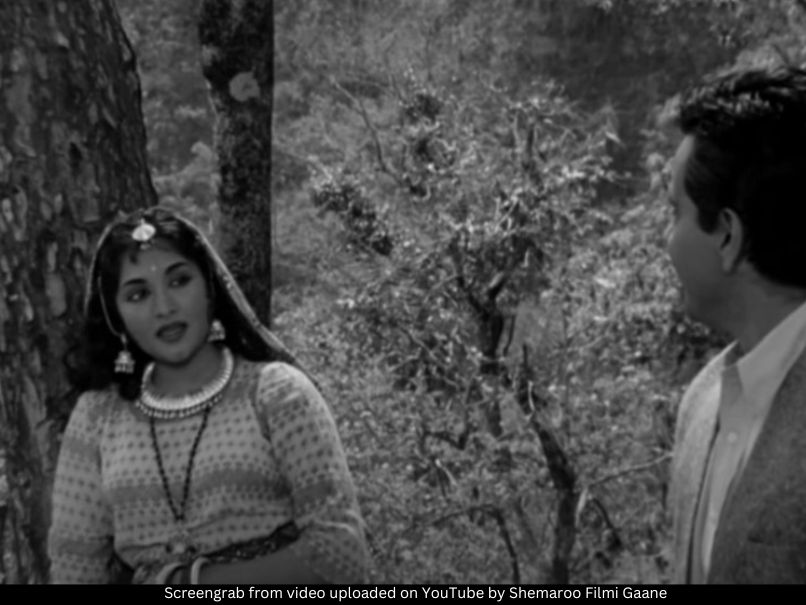
Did you know that the ‘Dil tadap tadap ke’ song from Madhumati movie was a Polish folk song and ‘Toote Huwe Khwabon Ne’ in the same film was inspired by Beethoven.

Did you know that Salil Chowdhury was one of the very few music composers of Bollywood who could read and interpret Western Classical notations? He gave some memorable songs, like ‘Itna na mujhse tun pyar badha’ (Chhaya), based on a Beethoven composition.
Did you know that most composers of yesteryear were rooted in Hindustani Classical music? But they freely innovated with the help of folk songs -- from anywhere across the globe. To them, music was universal and the property of only the people. They did not accept anything called plagiarism.
Thus, it was that Salil Chowdhury would carry a harmonium and a rickety tape recorder to remote villages to record folk songs. Thus, was born ‘Hariyala Sawan Dhol Bajata aaya’ (Do Bigha Zameen) originally from the Himalayan foothills. But his ‘Dil tadap tadap ke keh raha’ (Madhumati) was a Polish folk song and ‘Toote Huwe Khwabon ne’ in the same film was inspired by Beethoven.
On the other hand, composer Jaidev created ‘nadi naare na jao shyam pahiyan padun’ for the film ‘Mujhe Jeene Do’. It was originally a folk song from Madhya Pradesh.
Sachin Dev Burman’s range, do you know, was truly global? He innovated from kirtans, turning them into romantic duets, and folk into ballads, fusing Indian and Latin-American sounds to create a path-breaking soundtrack. But he was equally rooted in Tagore and the quintessential boatman in the riverine Tripura where he was born. Remember his ‘O Re Majhi’? His own voice, music critics said, reminded them of a boatman on a flowing river.
Music travelled across South Asia and mixed with the Sufi culture. A particularly fascinating piece of such creation was the folk song ‘Allah Megh De’ (Guide) which had a meandering journey from Bengal to Mumbai, and finally to Pakistan.
Sachin Da’s ‘Piya Tose Naina Lagey Re’ was originally composed for Devdas (1955). Sung in the background, it showed Parvati, played by Suchitra Sen, happy at learning that Devdas, her childhood friend, has returned. The song did not get used then and a decade later, it was picturised on Waheeda Rahman in ‘Guide’. And now, it was a dance number!
Sachin Da fell ill during the making of ‘Guide’ and needed hospitalisation. Dev Anand prepared to postpone the film, if needed, for six months. Sachin Da did not take that long but was sorry that the production was delayed because of him. On return to work, he composed five songs in a record time. Pleased, Dev Anand approved them all. But on closer hearing, he did not like ‘Aaj phir jeene ki tamanna hai’. He found the mukhda and the antara sound similar, which was not the norm.
He kept insisting that the song would not work. But while shooting in Udaipur, he heard many among his crew crooning that song. He relented and let the song be used in its original form. It was a hit!
To end this with a plagiarism story, do you know ‘Sunte the naam hum’ (Aah) composed by Shankar-Jaikishan sounds so much like Hollywood’s evergreen ‘Come September’ tune? But hold on. Aah came in 1951 and ‘Come September’ which uses the Bobby Darrin tune came in 1957. So, if there is copying, who is copying whom?